Here’s a simple test for how influential and powerful you are – go up to the front desk of a global event like the recent COP and see if you can get in. Then see if you can get past the next layer of gate-keeping, then the next and then the next. If you find yourself in a room at the centre of the venue, if you can walk up to anyone and any group and be welcomed in and nobody is checking the colour of your lanyard, then you are indeed both powerful and influential.
Events of that type are as ruthlessly striated as the social hierarchy of a Jane Austin novel, and the tools of exclusion are often a lot more subtle than colour-coded lanyards, from language signifiers (woe betide if you don’t speak English or have no one who can simultaneously translate for you) to simply recognising and being at ease with the people you are mingling with. In those spaces, some people are wearing a badge visible only to others in the know that indicates they are in the room but not part of the conversation.
The last COP sought to do something about that, with a record number of indigenous delegates, but they were nowhere near the sharp end of the last-minute deal-making that is now the traditional climax to these annual shindigs, an invisible velvet rope having long since blocked their path into the members’ lounge.
Why exclusion fails us all
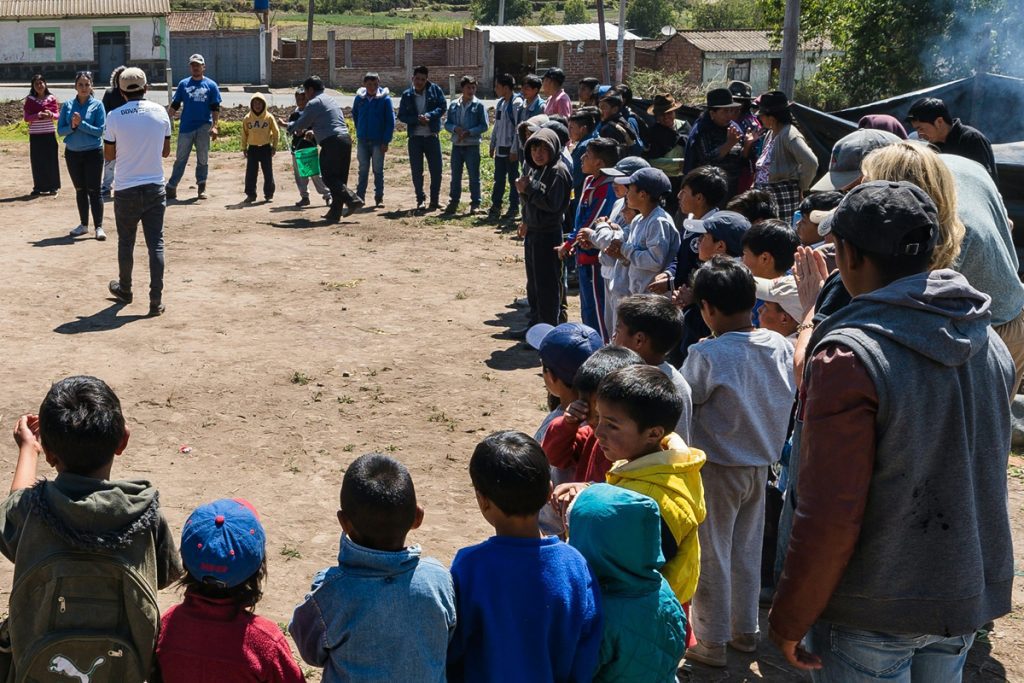
That rope is one of the reasons why hundreds of indigenous activists protested outside the COP venue – they represent people and communities who are disproportionately affected by climate change but who still have very little voice and say on what the world could and should be doing to tackle the crisis.
This is unjust, obviously, but it is also really stupid. Campaigning organisations and the policy and decision makers they are seeking to influence are both missing out on the experience and expertise of a swathe of communities living and breathing issues that for many, especially in the Global North, remain theoretical or are so far having a marginal impact on their lives and lifestyles. In the world of communications and campaigning, in the recent past those communities would have been labelled as “hard to reach” which was a polite way of saying “easy to ignore”. As a result they were often considered simply as an audience to reach rather than an active participant in developing and implementing campaigns. It is no surprise that in far too many instances, campaigns developed about rather than with communities were at best ineffectual or at worst paternalistic, offensive and counter-productive.
A new approach to advocacy
We’ve seen the power of truly involving and empowering communities first hand, from working with Grenfell survivors and bereaved families to get their voices heard in the media during Grenfell Testimony Week to building the capacity, confidence and capability of grassroots campaigners, scientists and advocates in Mexico, Mongolia and the Philippines to help them make a more powerful case for climate action. Treat people as active participants in tackling the issues they face rather than passive victims who need their experiences to be voiced by others and the impact is obvious.
It’s why we have launched “Seen and Heard” as a service to support organisations who want to retire the velvet rope once and for all and truly involve and empower marginalised people and communities in their campaigning and communications. The aim of the service is to help organisations in three simple ways:
- Develop platforms for the voices, experiences and insights of communities most affected by the issues
- Engage on issues in ways that truly connect and motivate without disempowering and objectifying communities central to solving them
- Shift from talking about communities to elevating and collaborating with them
The big issues we face globally, from the climate crisis to wealth inequality, violence against women and girls and public health need us to go all in to find solutions and make progress and we cannot do that with the same old people and interest groups taking amongst themselves behind the velvet rope. Going all in means more than simply opening up the space to everyone, it means going to the spaces already occupied by those who have been traditionally ignored or patronised and supporting them to be seen, heard and responded to by those who continue to hold the levers of power.
You can find out more about how we can help you take that approach here.
Let’s talk
If you’re ready to elevate the voices and experiences of those most affected by the issues you seek to address, now is the time. Get in touch with our team to explore how we can help you develop more inclusive and impactful communications.