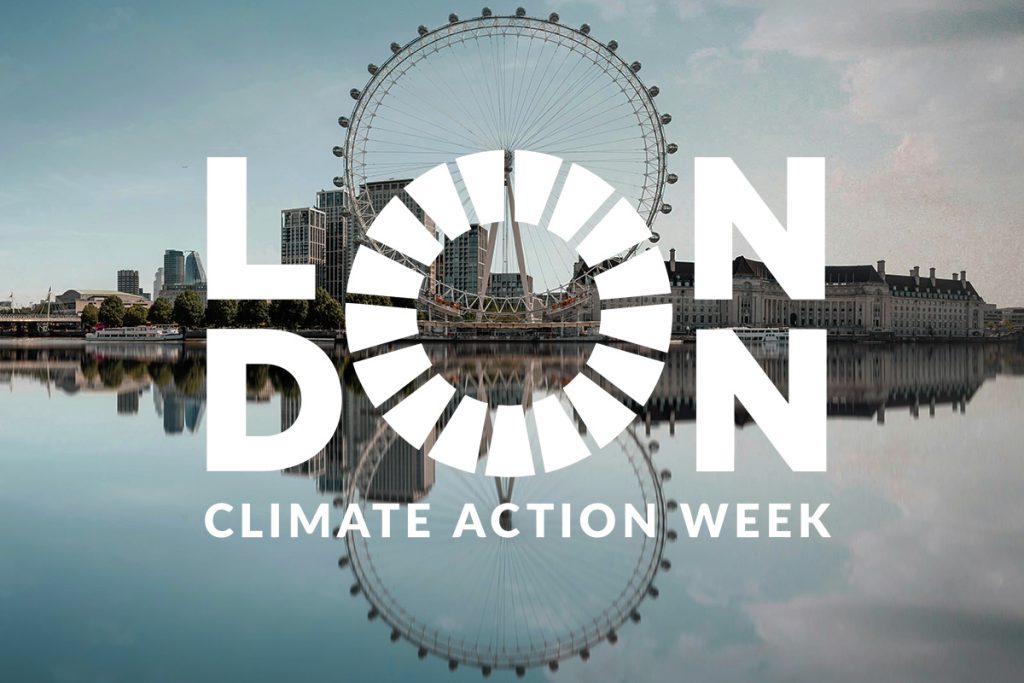
London Climate Action Week seems to get bigger every year. More events. More conversations. More organisations. More people asking how we accelerate action in a world where the impacts of climate change are becoming harder to ignore.
But despite the breadth of discussions our team attended across the week, one theme kept surfacing in different forms: climate is starting to break out of its sustainability bubble.
And it’s about time.
For years, climate conversations have often sat in their own category, separate from health, food, education, culture, economics, or everyday life. But increasingly, those boundaries are disappearing. Because “sustainability” is rarely the strongest way in.
The most compelling conversations this week weren’t about carbon, net zero, or emissions targets. They were about things people care more about: healthier lives, affordable food, resilient communities, thriving businesses, and a better quality of life.
Health was a particularly powerful example. The World Health Organization describes climate change as a fundamental threat to human health, affecting everything from clean air and food systems to health infrastructure and livelihoods. Between 2030 and 2050, climate change is expected to cause an additional 250,000 deaths each year from undernutrition, malaria, diarrhea, and heat stress alone.
That’s not an environmental story. It is a human story and the organisations that land this shift in framing will be the ones that unlock wider engagement and action.
Food emerged as another reminder of how climate conversations are becoming more interconnected. Food systems account for more than one-third of global greenhouse gas emissions, spanning agriculture, land use, production, transport, packaging, and waste. Yet food is often treated as a side conversation, sitting somewhere between climate, health, farming, and consumer behaviour. That feels like a missed opportunity.
Food is one of the most tangible ways people experience climate change. It connects farmers to consumers, health outcomes to agricultural practices, and individual choices to global systems. The conversations we heard this week also highlighted just how quickly those systems can change, from regenerative farming gaining momentum to unexpected discussions about how GLP-1 weight-loss drugs could reshape consumption patterns and, potentially, sustainability outcomes. For communicators, this is where climate becomes tangible: connecting complex systems to everyday experience in ways that change behaviour, markets and policy.
The role of storytelling in climate advocacy
Another theme that dominated, was the continued power of storytelling. In a week packed with discussions about policy, finance, and implementation, there was also a reminder that facts alone don’t always change behaviour. Stories aren’t a “nice to have.” They shape the voices that are heard and the priorities that are moved.
Louis VI’s Barbican installation created using immersive audio recordings from three Indigenously stewarded locations, where visitors were expected to stay for a few minutes. Instead, the average visit lasted two and a half hours. It is a small example, but an important one: advocacy communications is not only about telling people what is at stake, but creating space for the voices and experiences closest to the issues, to be heard by the wider audience
People often talk about public disengagement with climate and nature as though the problem is a lack of interest. But the challenge is not getting people to care. It’s about creating conditions that allow them to connect. Whether through culture, creativity, or lived experience, the conversations that resonated most were often the ones that made climate feel personal rather than abstract. The best communicators are already making this shift.
From virtue to value: where climate communication is moving
The next phase of climate communications strategy isn’t about persuading people that climate change matters. Most people already know it does. The world’s largest climate opinion survey found that 80% of people globally want their governments to take stronger action on climate change. The challenge is helping people see what climate action makes possible and why that intersects with the things they already care about.
That means shifting from virtue to value. Not “look how sustainable we are.” But “look what this makes possible.” Cleaner air. Improved health. More resilient communities. Stronger food systems. Cooler cities. Safer schools and workplaces.
Those are the benefits that make climate action feel real.
Our overwhelming feeling at the end of London Climate Action Week is fundamentally a positive one. Not because the challenges are getting smaller, they aren’t, but because of the sheer number of people working to tackle them from every possible angle: scientists, farmers, healthcare professionals, artists, businesses, policymakers, and communities.
Climate action is often tricky, messy, and deeply politicised. But progress is built by people willing to do that work anyway. For organisations, this is no longer just a messaging challenge, it’s a question of how effectively communication enables delivery, alignment and scale.
At Forster we are working with organisations across the globe navigating many of these challenges – if you’re working through similar complexities, let’s talk.