Effective advocacy is not simply about getting the right message in front of people with influence. It is also about who gets to shape that message, whose expertise is recognised and whether communications creates opportunities for the people closest to the challenges being addressed.
These questions were at the centre of our recent event with Lisa Hawkes, programme lead at TRANSFORM and Global Sustainability Senior Manager at Unilever, and Mary Ngechu, founder and patron of waste management enterprise, TakaTaka Ni Mali. Having worked together through TRANSFORM, an impact accelerator led by Unilever, the UK Government’s Foreign, Commonwealth, and Development Office (FCDO) and EY supporting entrepreneurs across Africa and Asia, they brought perspectives from both sides of the multi-stakeholder partnership.
Their discussion explored what happens when communications become part of how a programme creates impact, rather than simply how it talks about it. From sharing power to building a lasting legacy, we’ve walked away with five key takeaways:
1. Share power, not just platforms
Meaningful involvement starts with a shift from talking about entrepreneurs to creating opportunities for them to speak for themselves. As Lisa put it, that means making entrepreneurs central to communications and moving beyond using them as case studies.
Mary captured the value of this through the ideas of voice, ownership and dignity. The opportunity to tell her own story gave her greater ownership over how her experience is represented. It also affirmed the expertise entrepreneurs bring through their local knowledge, relationships and understanding of what needs to be done. Our director Peter Gilheany nicely summed up this approach to partnership as “confident humility”: being confident in what each party can contribute, whether as a donor or impact enterprise, while recognising that no one has all the answers.
This also informed TRANSFORM’s We TRANSFORM Lives proposition, which sought to move away from a traditional donor-recipient dynamic and recognise that impact is created collectively by entrepreneurs, funders, corporates and researchers.
Putting that principle into practice also means thinking carefully about, not just who is participating, but how. At FCDO’s Global Partnerships Conference this year, TRANSFORM invited entrepreneurs to share the stage with programme representatives, and rotated hosting responsibilities so everyone had an opportunity to lead the conversation. It was a deliberate way of ensuring power dynamics did not inadvertently reappear on stage.
2. Make communications a driver of impact
Communications can do more than tell people a programme is succeeding. Done well, it can help create the conditions for further impact by sharing useful knowledge, raising the visibility of entrepreneurs and bringing people together who might otherwise never connect.
Mary saw this first-hand when TRANSFORM connected her with TrashCon, another enterprise in its network working in India. What began as an exchange of knowledge, including visits between India and Kenya, developed into a partnership that brought TrashCon’s waste technology to the Kenyan market. Speaking opportunities also opened doors. At one TRANSFORM event, an entrepreneur made a connection that ultimately led to further grant funding for their enterprise.
Lisa described this as “ecosystem building”. Communications can create the connections and opportunities from which new partnerships, knowledge sharing and funding can emerge, even if the eventual outcome cannot be mapped out in advance.
That said, communications cannot operate in isolation. Lisa also stressed the importance of having shared goals across a multi-stakeholder partnership, alongside clarity on what communications can contribute to and where the wider programme team needs to take over.
3. Think beyond influencing people in power
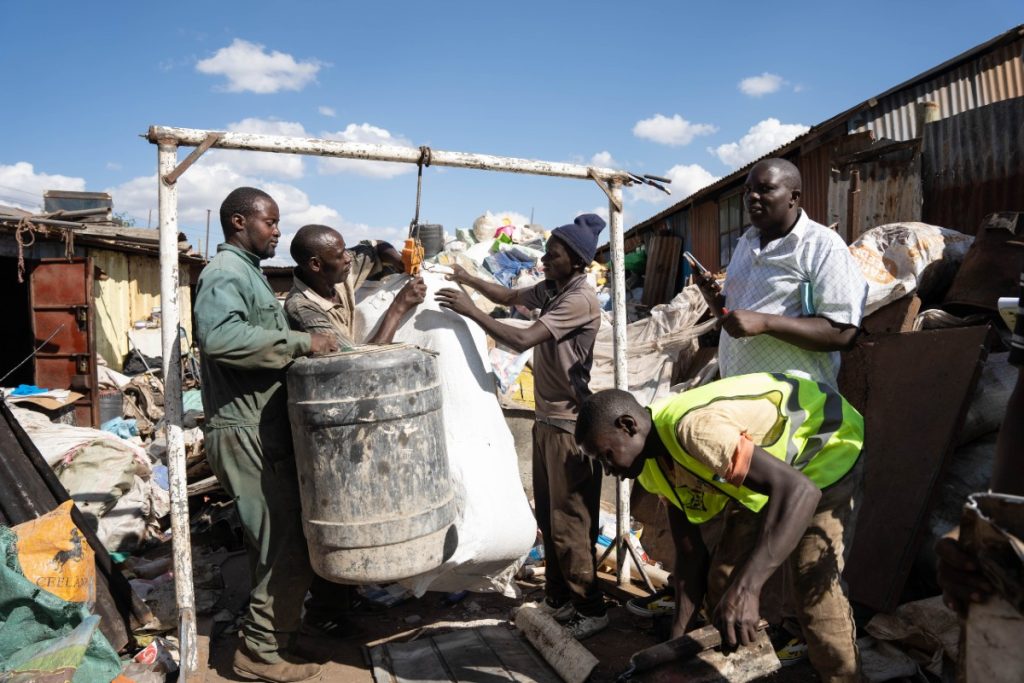
Mary challenged the idea that advocacy is primarily about influencing policymakers, funders or corporates. Through TakaTaka Ni Mali, she also works within communities to shift perceptions of waste and support people to see its economic value. Central to her approach is ensuring that waste workers have opportunities to share their own expertise.
Her experience through TRANSFORM helped shape this philosophy, which Mary has carried into her growing work convening people across the waste sector. TakaTaka Ni Mali’s latest Africa Waste is Wealth conference brought together speakers from 16 African countries to share their perspectives on waste and its potential as a resource. “I don’t speak for them, I create spaces for them to speak,” she explained.
4. Go where your audiences already are
Reaching a wider range of voices requires communications to be built around the people you want to engage. It can be tempting to build an owned platform and expect audiences to come to you. Lisa encourages organisations to understand the networks people already use, who they trust and what they actually need. Go as local as possible, including communicating in local languages.
That requires proximity as well as research. Mary highlighted the value of TRANSFORM teams visiting communities and seeing the work first-hand, helping them understand projects from the ground-up.
5. Plan for legacy from the start
Multi-stakeholder partnerships have a natural lifespan, making it important to consider from the outset how learnings will live on. Taking stock throughout the programme can strengthen its work as it develops, and communications can help ensure the resulting knowledge and evidence reaches people who can use it. Ultimately, extending impact beyond the programme.
As TRANSFORM comes to a close, many lessons learned have been captured in its playbook. Its final chapter focuses on sharing learnings, with practical takeaways for communications teams working across multi-stakeholder partnerships, including aligning activity with shared objectives, agreeing responsibilities and managing sign-off processes.
Watch the full conversation here.
Download the TRANSFORM playbook here: https://ey.com/transform-playbook