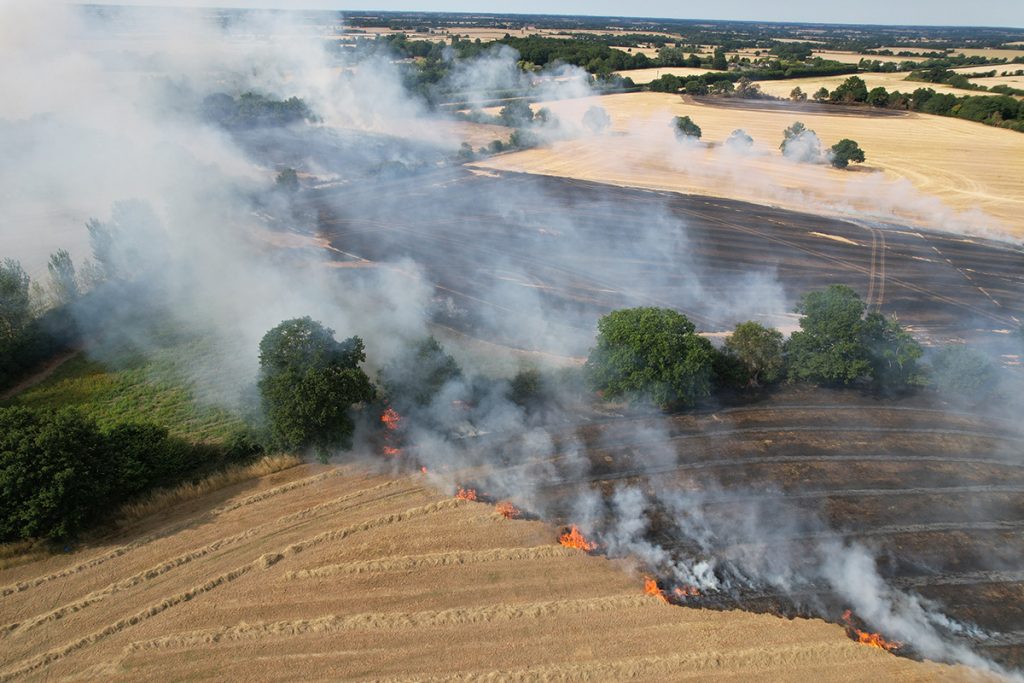
This summer, heatwaves, wildfires and food security concerns brought climate change directly to our doorsteps. As extreme temperatures become more frequent and severe in the UK, climate change is an immediate reality rather than a future risk. According to the Met Office, it is “very likely” 2027 will be the hottest year on record.
What is changing is not the existence of extreme heat or its impacts, which have long shaped daily life for many communities across the Global South, but who is experiencing them. In the UK and across Europe, climate change has often been perceived as something happening elsewhere, to other people, or in the future.
The missing context in climate coverage
In the UK, much of the media coverage often fails to explain the connection between extreme weather and climate change. While heatwaves, wildfires and flash flooding, which can be made more likely by drought conditions linked to extreme heat, increasingly dominate headlines, the underlying drivers of these events are frequently left out of the story.
Three in five stories covering the heatwaves in the UK this summer failed to reference climate change at all. Organisations seeking to accelerate climate action, and the communications professionals advising them, must help people connect the dots between lived experiences, climate science and the actions needed in response. Otherwise, audiences are left with symptoms but no diagnosis.
Centring lived experience
Technical discussions about rising temperatures can feel abstract. First-person accounts demonstrate the true, human cost of their effects.
The Guardian recently told the story of people living in 54-degree heat in Delhi, India. Through personal testimonies, residents described disrupted sleep, rising energy costs, health impacts and lost income as they adapted to increasingly extreme heat. The project invited residents to document their experiences through “heat diaries”, creating a richer picture of how heat is experienced at a community level. By putting lived experience at the centre of the story, the project helped move the conversation beyond temperature records and climate data, illustrating the real-world impacts of extreme heat while informing efforts to develop more targeted solutions for vulnerable communities.
Similar approaches can help audiences understand climate impacts closer to home. A recent Bloomberg article centred the experience of UK healthcare workers, who described the impact of this summer’s heatwaves on hospitals. Staff reported patients being too sweaty to receive intravenous drips, medication at risk of degrading in extreme temperatures and healthcare workers experiencing heat exhaustion. These stories translate climate change from an environmental issue into a human one.
Moving beyond event-driven storytelling
Climate reporting remains overwhelmingly event driven. Coverage surges during heatwaves, floods and wildfires before quickly fading when there is no news. Audiences are exposed to climate change through a series of individual disasters rather than as a long-term, escalating event.
Climate-focused organisations and their communications advisers have a role in maintaining attention between events, helping audiences understand climate change as an ongoing reality rather than a series of isolated crises.The challenge is not simply to communicate during heatwaves and wildfires, but to maintain a broader narrative about resilience, adaptation and preparedness long after headlines fade.
Connecting solutions to the problem
Organisations advocating for climate action must use their communications to offer audiences solutions and practical pathways forward, while challenging the often rife misinformation surrounding them. References to climate change in net-zero coverage fell from 90 per cent in 2018 to just 42 per cent in 2024. Net zero has been re-defined as a culture-war issue, rather than a solution to the climate emergency.
Narratives must be grounded in evidence, helping audiences distinguish between legitimate discussions about how societies respond to climate change and misinformation that obscures scientific consensus.
This summer’s heatwaves will not be remembered as an anomaly, but as part of a longer-term shift, as the Met Office’s recent warning makes clear. As extreme heat brings climate change close to home for people across the UK and Europe, climate-focused organisations, policymakers and their communications advisers have a vital role in building public understanding of, and support for, the adaptation needed in years ahead.