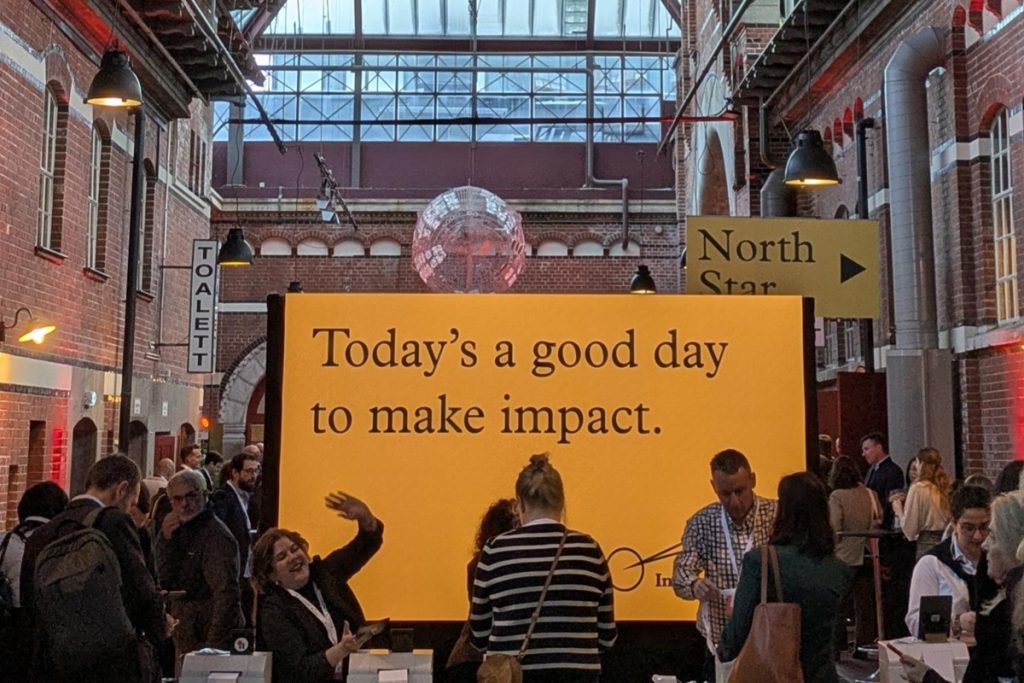
Last week, at the Impact Europe event in the Swedish city of Malmo, I experienced what cross sector collaboration really means. United by a belief in an impact economy, the conference was filled with a mix of business and philanthropic leaders, investors, innovators and entrepreneurs who all recognise the need to work as a community to drive social and environmental outcomes alongside financial returns.
Positive, pragmatic and focused on cutting through the current geopolitical maelstrom to enable progress, today’s reality was consistently met with evidence of what is working and the opportunity to do more. And there is opportunity; from brilliant examples of new and community-based solutions, to increasing levels of finance with direct and indirect investments in the impact economy doubling since 2022 to reach €190 billion by 2024.
As part of discussions on how to maintain growth of the sector, we ran a workshop on ‘Navigating the ESG Backlash’. In a packed room – and with thanks to those who were happy to sit on the floor when chairs ran out – we co-created practical communications responses in the face of global scepticism.
Reframing the ESG conversation
Addressing the first question of how to evolve the language to use to counter mis and dis information around ESG, attendees were quick to identify the words and phrases that have been hijacked by those who want to maintain the status quo. From making DEI and net zero the enemy to a constant narrative around bureaucracy, reporting burden and costs, there was also recognition that ESG is hampered by the wide-ranging interpretations of what it means and the confusing use of acronyms. More broadly, the use of jargon across the sustainability movement often means the benefits being generated get lost in the conversation.
Instead, the opportunity of sustainability action needs to become embedded with a focus on the value that is being created in both the short and longer term. By emphasising the business case for investment, alongside the need to respect people and planet, the provision of a binary choice in ‘ESG or growth’ can be overturned to focus on the real outcomes being created by a new, impact-based economy. Words and phrases from resilience, resources and risk management to innovation, evidence and talent were all highlighted as important.
Building trust across audiences
The second half of the workshop focused on how to engage audiences; from governments and policymakers to financial capital sources – be it private, venture, institutional or philanthropic – to functional leads in an organisation. And while it was easy to list the groups that audiences fall into, it was also seen as fundamental to recognise them as individuals with specific interests and motivations, alongside clarity on how the impact solutions can help them.
A broad range of audience engagement ideas emerged, falling into three main areas of building understanding of the opportunity, bringing impact to life and incentivising involvement. This was underpinned by the realisation that the impact organisations themselves may not be the best people to deliver the messages, and there is a need to build allies inside and outside target organisations to help build trust with the end audiences.
In summary, if we are to increase participation in the impact economy, we need to be clear about the problems being solved and the value being created, ensure information is both relevant and easily accessible, and be unafraid to lean into experiences to bring solutions to life.
These are important, exciting times. Let’s make an impact.